
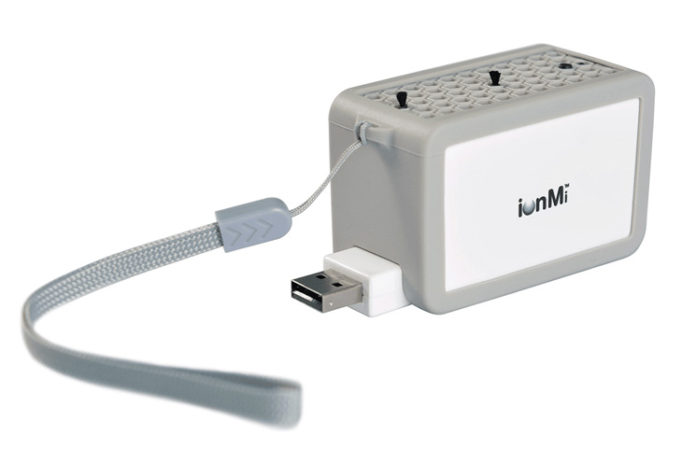
An ion device is usually a negative ion generator: a small unit that releases negatively charged ions into the air around it. The seller of the ionMi and ionbox 20m models says those ions attach to dust, pollen and smoke so the particles drop out of the air, and that its units have no filters and are ozone-free. Those are the seller’s claims, and the sections below show what to check before you buy.
Disclosure: This article may contain affiliate links. If you click a link and make a purchase, we may receive a commission at no additional cost to you. All opinions remain our own.
| Product Page | ionMi product page and ionbox 20m product page |
| What it is | Negative ion generator; the seller calls ionMi a rechargeable, wearable model |
| Claimed output | Up to 20 million negative ions per second (seller’s claim for both models) |
| Power use | 1.5 watts (the seller’s figure for its ionbox units) |
| Price shown | ionMi $15.95 and $54.95 USD; ionbox 20m $69.95 and $99.95 USD |
| Refund | Full refund if you don’t notice better indoor air within 30 days (seller’s terms) |
| Shipping | Seller says free worldwide shipping; the 20m listing says shipping is calculated at checkout |
| Filters | None, according to the seller |
What is an ion device?
An ion is an atom or molecule with a net electrical charge, and a negative ion has more electrons than protons. Wikipedia’s ion entry covers the basics and notes that ions are used in air purification by disrupting microbes. On the ionbox.net home page, the seller describes its ionMi and ionbox 20m as negative ion generators, which is the product this page covers.
Other things called ion devices
Searches for “ion device” also turn up technology that has nothing to do with room air. A 2022 PubMed review on synaptic devices covers ion-movement hardware for brain-inspired computing. A 2022 PubMed review on zinc-ion storage covers energy storage devices, and a 2025 PubMed review on capacitive deionization covers a water-treatment method. Check the exact product name and seller before you assume a match.
How does a negative ion generator work?
The seller says its units release negative ions that attach to airborne particles such as dust, pollen and smoke. The particles then settle onto surfaces instead of staying suspended, according to the seller’s description on the ionbox.net home page. Wikipedia’s ion entry says ions in a gas-like state are highly reactive, which is one reason to ask the seller for test data rather than rely on the description alone.
Do ion generators really work?
The seller makes specific claims. Its home page says the ionbox 20m and ionMi stopped mold growth by up to 90% within the first few hours, that its ionizers can help remove airborne dust by up to 95%, and that its negative ion generators have been scientifically proven to reduce harmful bacterial colonies in homes. It also says each ionbox is individually tested with a negative ion counter. Ask the seller for the test report behind each chart before you rely on the numbers.
The customer reviews on the same page are personal reports. They describe fresher air, better sleep and calmer focus, and one reviewer writes that some people say they can’t notice any difference. Those are personal experiences, not measurements.
What do negative ions do to your body?
Some customer reviews on the seller’s page describe better sleep or mood, but the seller’s own copy does not claim these effects; it speaks of cleaner air and less dust, mold and bacteria. One customer says she researched negative ions after a beach trip, tried an IonBox, and saw better sleep that she tracked on her Apple Watch. Another says her mood lifted. Ask the seller which study, if any, supports these body effects before you decide.
What happens if you stay in a room with an ionizer?
The seller says the ions attach to particles in the air around the unit, so the particles settle out over time. One reviewer said the unit freshened the air when they sat directly in its path, and another said the room smelled fresher. Time spent near the unit raises the ozone question below, so ask about ozone output before you spend long hours beside one.
Side effects: is it healthy to breathe ionized air?
The seller says its units are “ozone-free” and “Lab Tested.” One customer review says ozone is “produced by many units” and that this one does not produce any significant ozone. Ask the seller for the lab test that measured ozone output for the exact model you’re buying. If you have a breathing condition, talk with your clinician about whether this fits your situation.
Is it safe to sleep with an air ionizer?
The seller’s home page places its units in bedrooms, home offices and small rooms, and a reviewer with dust allergies says the unit helped her breathe more easily the next morning after it went in her bedroom. Ask support whether the model is designed to run overnight and what safety testing covers it.
How long should I leave the ionizer on?
The seller says its ionbox units use 1.5 watts and cost “just pennies to run.” Reviewers describe leaving them on all the time, and one says a unit had been running for days. Ask support for the run-time guidance in the manual, and follow it before you set your own schedule.
Where should I place an ion device?
The seller says its units suit bedrooms, desks, home offices and small rooms. One reviewer said the air felt fresher when sitting in the path of the fan. The seller’s pages give no placement distance, so follow the manual and ask support for placement and bedroom-use guidance.
What’s better, an air purifier or an ionizer?
The seller calls traditional air purifiers loud, bulky and costly to run because of filter replacements, and says its ionizers are quiet, filter-free and compact. An ionizer has no filter to replace, as the seller notes. Which suits you depends on what you need removed and how much noise and upkeep you will accept. Ask the seller for side-by-side test results if the comparison matters to your purchase.
For a cooling option instead of air cleaning, see the portable air conditioners guide and the cool air portable AC review. For surfaces rather than air, the mobile klean review covers a UV sanitizer wand.
How much do ion devices cost, and where can I buy them?
Prices as of October 27, 2026; check the checkout for today’s.
| Model | Price shown (USD) | What the seller lists |
|---|---|---|
| ionMi | $15.95 and $54.95 | Rechargeable, wearable negative ionizer; up to 20 million negative ions per second |
| ionbox 20m | $69.95 and $99.95 | Compact negative ion generator; up to 20 million negative ions per second; shipping calculated at checkout; the listing showed a Sold out label |
Each listing shows two prices, so check at checkout which one applies and whether the model is in stock. The home page says the brand is sold on Amazon and Walmart, so compare there before you pay. For travel, the best rechargeable devices for off-grid adventures covers other rechargeable options.
Refund and warranty terms
The seller offers a 30-day money-back guarantee. Its wording is that if you don’t notice an improvement in your indoor air within 30 days, you can return it for a full refund. Since you judge whether the air improved, note the room before and after you start. Ask support who pays return shipping, and ask for the warranty terms in writing.
How do I check the seller before ordering?
The seller’s home page lists secure checkout, fast shipping and friendly customer support, along with a 4.5/5 rating from over 4,000 customers. Those are the seller’s own figures. Our guide on verify consumer-device claims reviews recalls and sellers explains how to check claims and sellers yourself.
Before you order
- Confirm the price, stock and shipping cost to your country at checkout.
- Ask the seller for the test report behind the mold, dust and bacteria charts.
- Ask for the lab test that measured ozone output for the exact model.
- Ask support for overnight-use and run-time guidance in writing.
- Get the 30-day refund rule and return-shipping terms in writing.
- Compare the price on Amazon or Walmart before you buy from the seller.
By InfinitePowerSolutions.com Technology Desk


